Northeastern Turkey
The territory of Northeastern Turkey has a rich historical background. This was a land of the Laz (one of the Georgian peoples) settled by Greeks and others, a part of the Persian Achaemenid Empire, a part of the Kingdom of Pontus, of the Roman Empire, the Byzantine Empire, the cradle of the Empire of Trebizond (a Greek empire created by the people who ran away from falling Constantinople), and finally a part of the Ottoman Empire and Turkey.
This place had a very different meaning in different ages. Sometimes a center of an empire (Trebizond), sometimes an important trade center, and sometimes just a faraway neglected province.
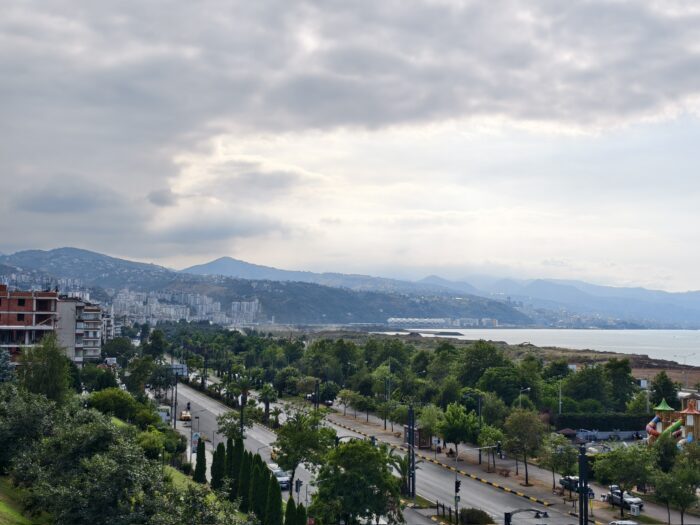
Ethnically, the region (especially its easternmost part) belongs to the Lazs and other Georgians with many Turkic inclusions; however, culturally, it’s a Turkish province since a long time ago.
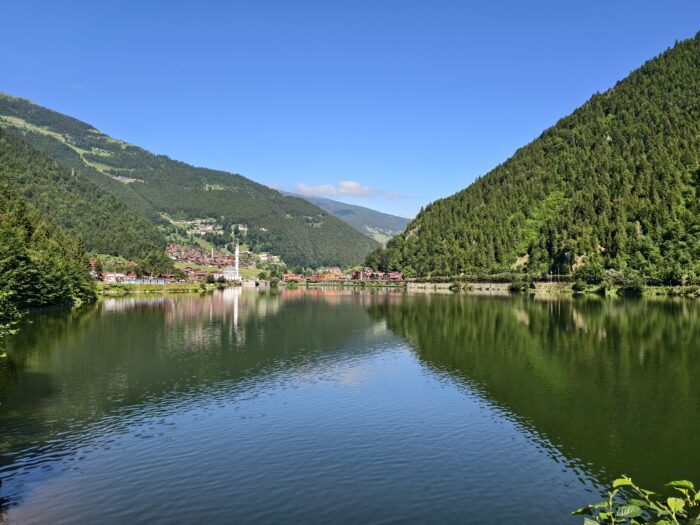
Tea, fish, honey, nuts
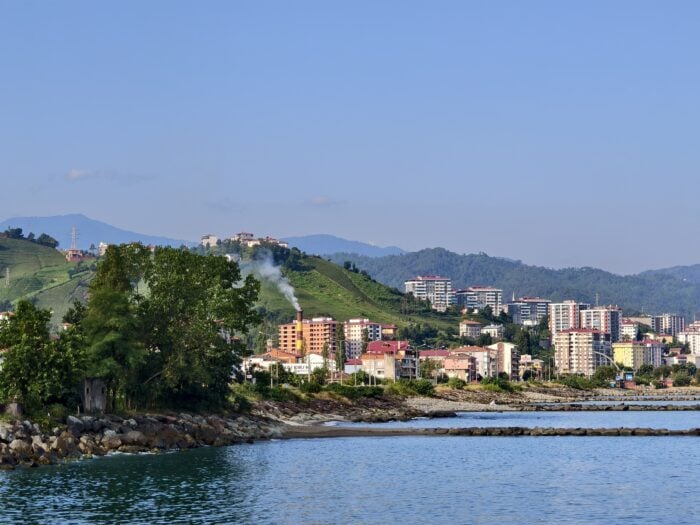
The economy of the region, among other things, is famous for tea, nuts, fish, and honey. The center of tea production is the city of Rize, though there are a lot of tea factories in other cities as well. As soon as you cross the Turkey-Georgia border, the omnipresence of tea terraces and factories is surprising. Every small town has at least one chimney— the symbol of tea production— and many such factories in big cities. Turks usually use two kettles to brew tea. One is for tea itself; it’s brewed for around 15 minutes, very strong. Another big kettle is for boiled water. You usually pour a little “strong” tea into your cup and then add boiled water. Actually, Turks use a very specific form of a glass for tea, like a tulip. It’s called bardak. The form is allowing the tea to stay hot for longer while the top part of it is cooled sooner, not to be burning.
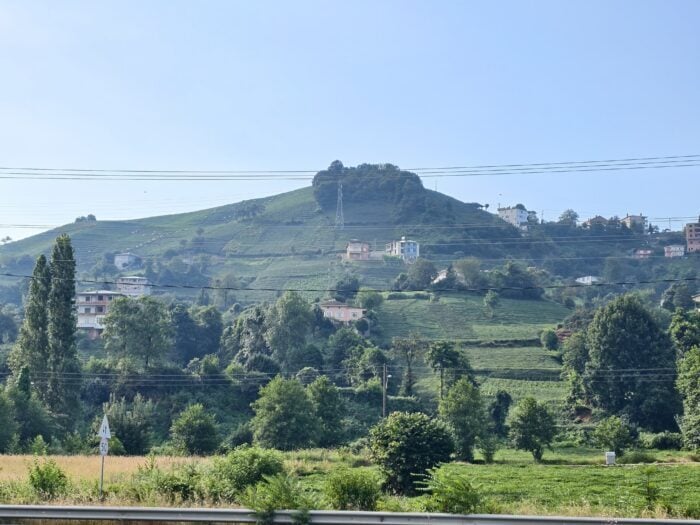
The region is rich with mountains and forests, an ideal climate for hazelnuts to grow. Turkey is one of the top producers of hazelnuts in the world, having contracts with many international companies, so your Nutella is probably made of Trabzon or Rize nuts. Honey is produced widely as well. 100% of production is properly certified.
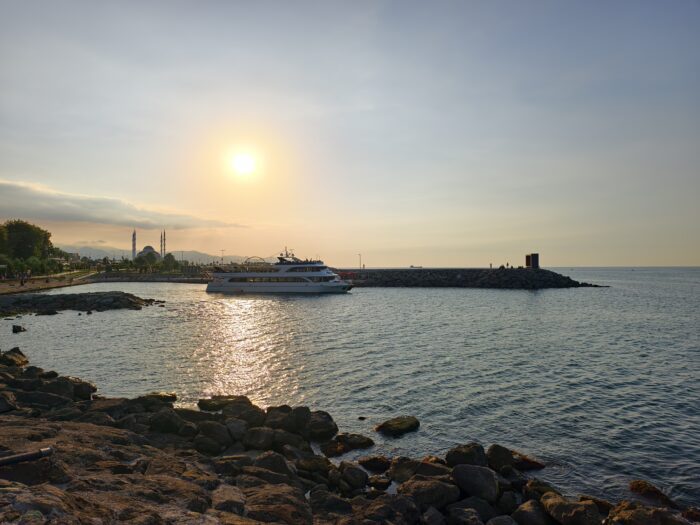
As for fish, the Black Sea provinces are a bright contrast to the neighboring Georgia, sharing the same sea. Contrary to Georgia, fishing is really developed in Turkey as well as seine production. Every big city in the region has its own shipyard. All ships are modern and well-equipped. So, Turkey is catching fish along the whole shore up to the Russian border and sells it even to Georgia, which can’t provide itself with fish.
Architecture, cafes, atmosphere, cuisine
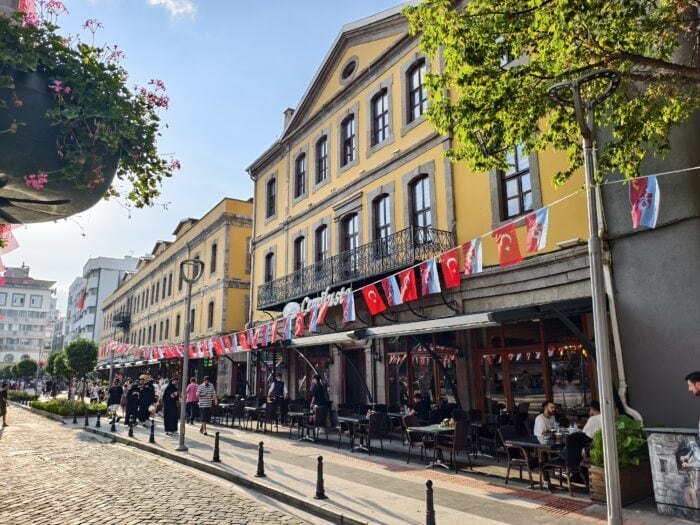
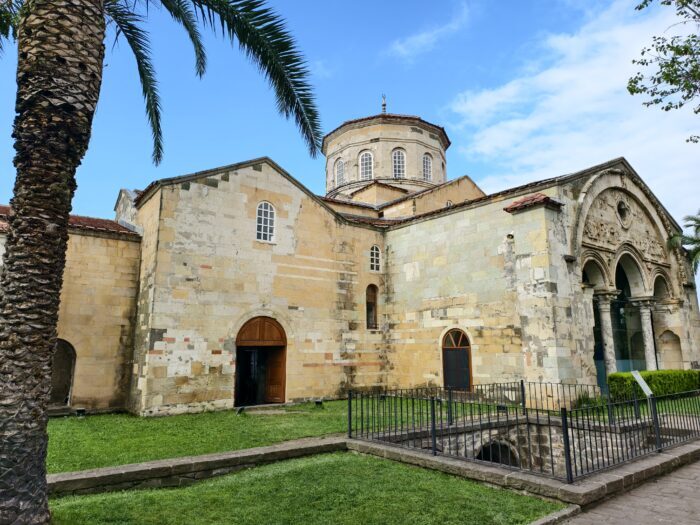
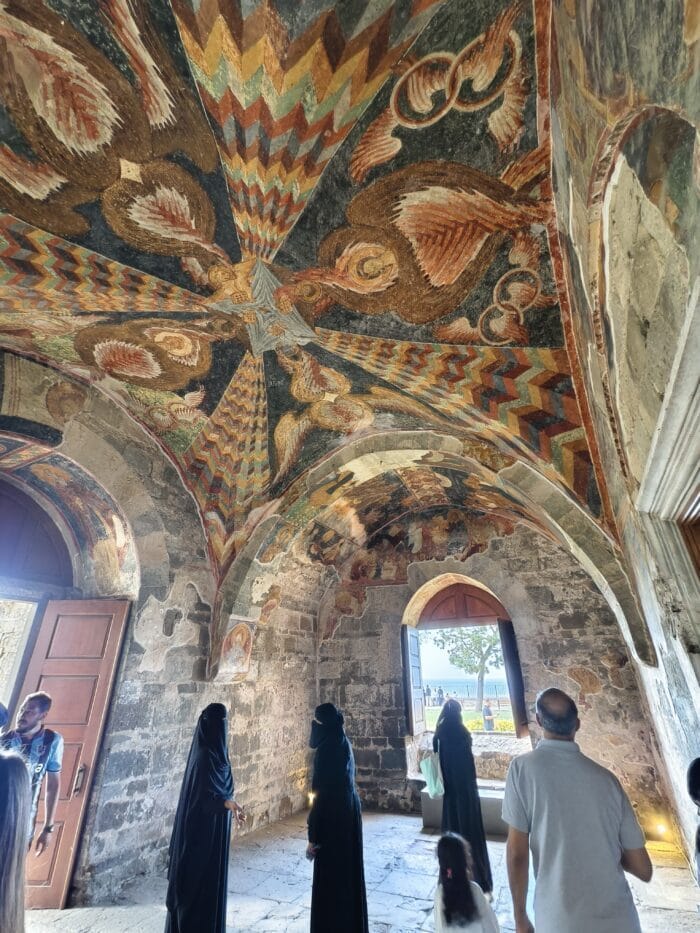
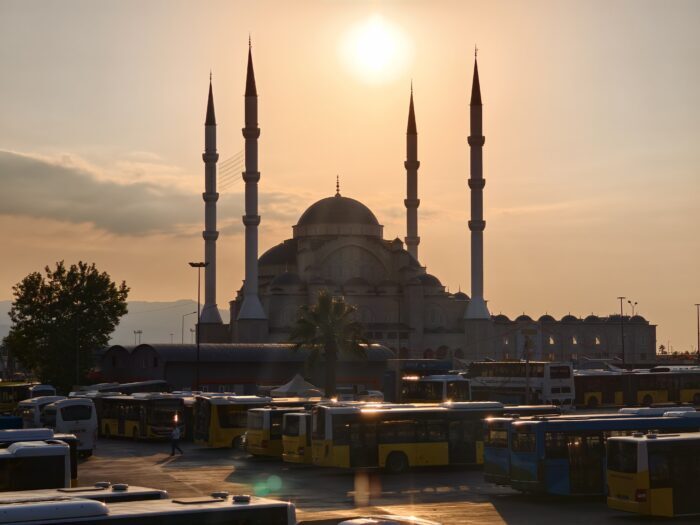
Trabzon has very few remnants of the ancient Byzantine buildings. The most prominent of them are the Roman or Byzantine-built Trabzon Castle, Church of Saint Anne, Panagia Chrysokephalos cathedral converted to a mosque, and a couple of others. Then there are main cathedrals from the Trebizond Empire period, like the main cathedral of the empire, Hagia Sophia (a cathedral made to remind the famous Hagia Sophia in Constantinople from where a lot of citizens ran to Trabzon).
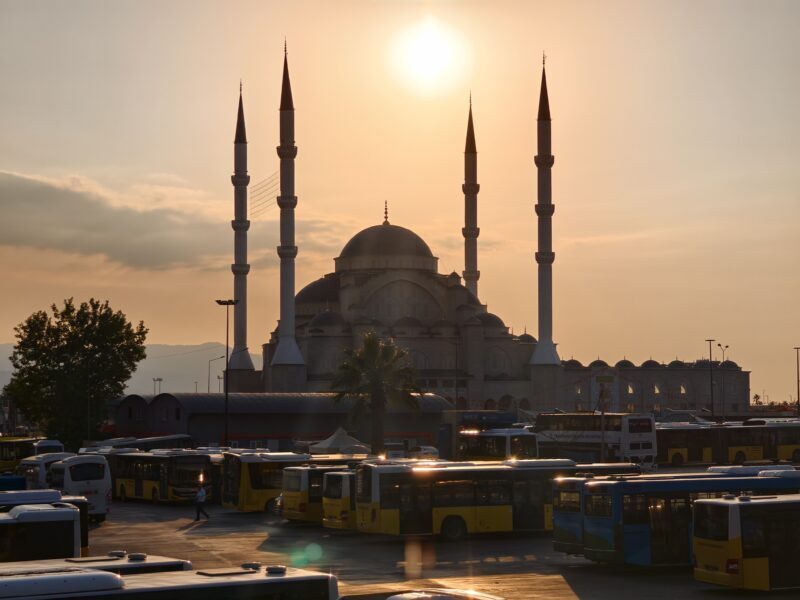
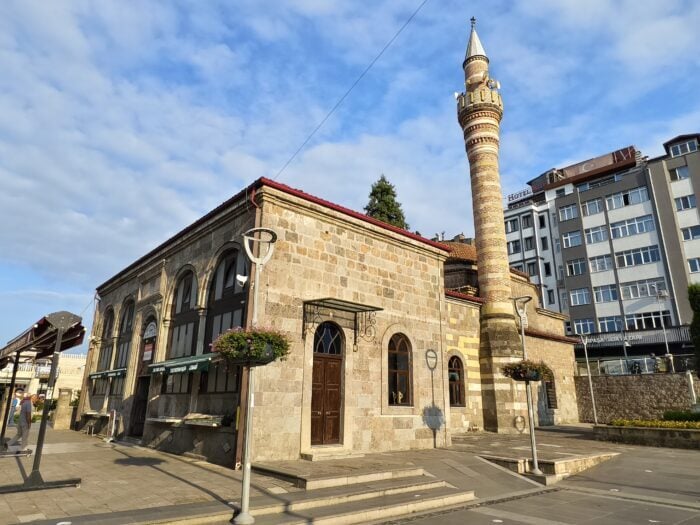
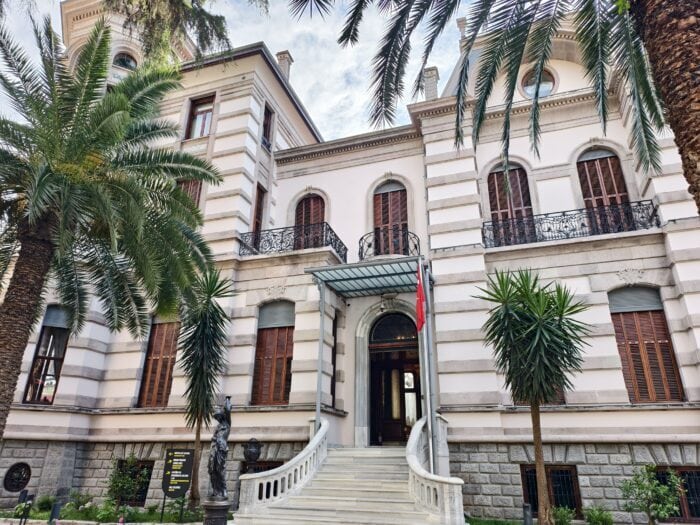
And of course, there are several mansions, mosques, and bridges from the Ottoman era, like the İskender Pasha Mosque or the Bedesten market.
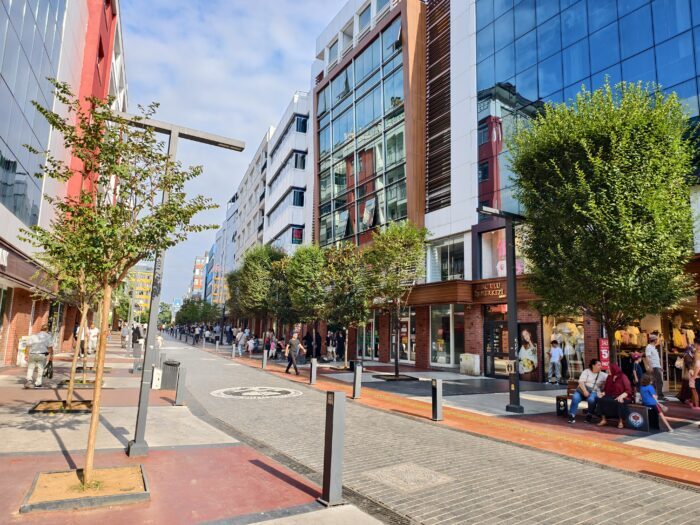
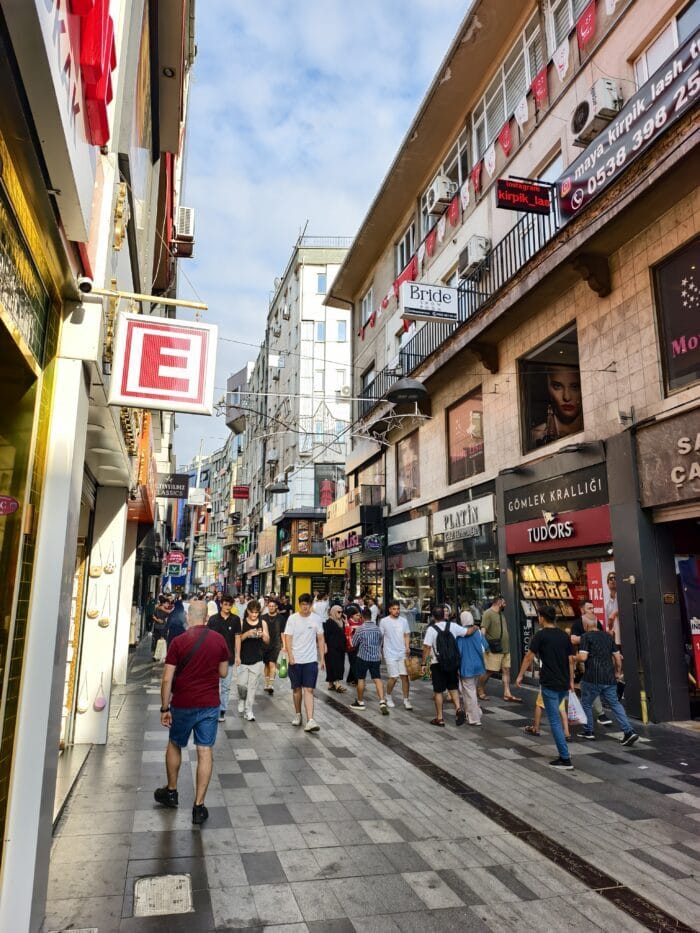
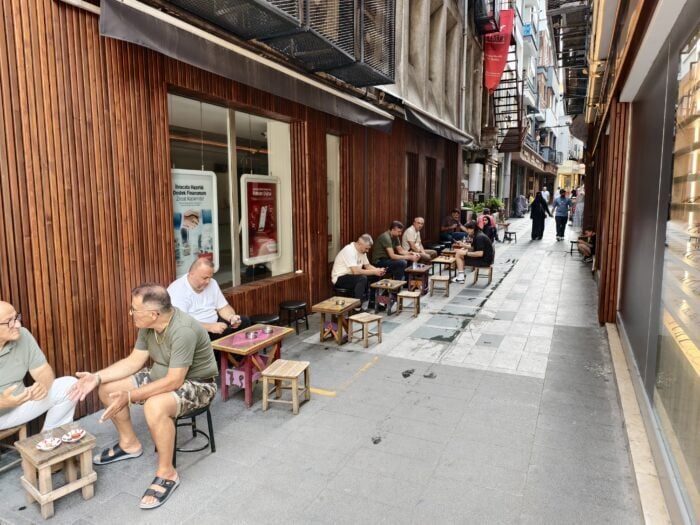
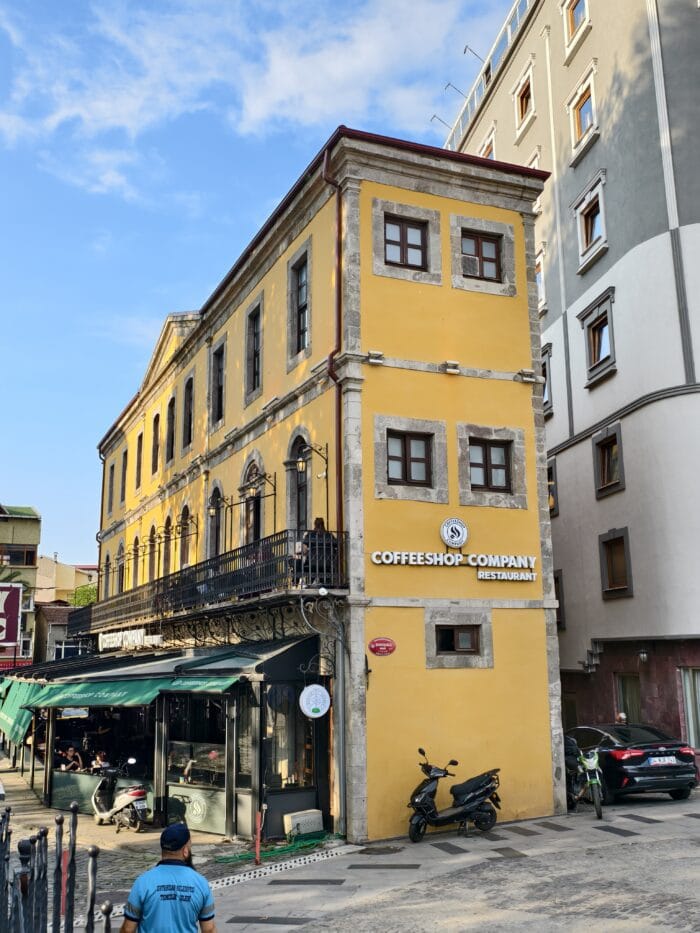
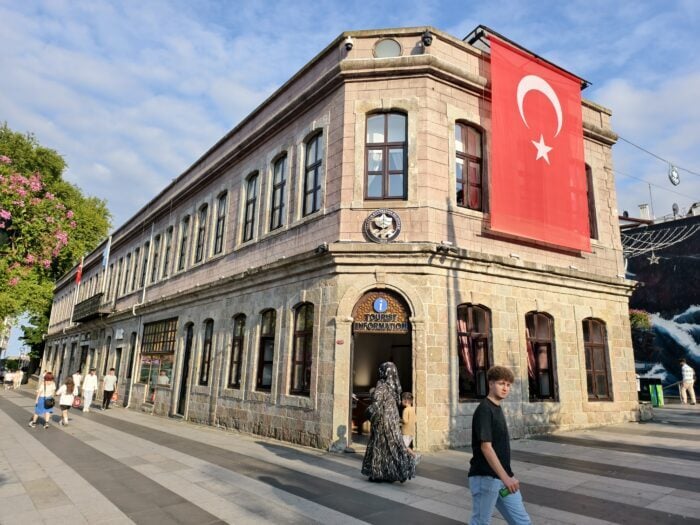
All in all, the city center and the embankment are very cozy and walkable. There are a plethora of cafes and restaurants suited for any taste. Providing the city is located on a sea shore, you can always eat fish in one of the small local tavernas; a local name for that is lokanta – usually, this type of facility provides unexpensive and tasty fresh food. Usually, Turks bring a bread plate for free, and a bardak of tea if you are lucky. As for desserts, you can always try fresh baklava cooked just there or pick any sort of helva or a cevizli sucuk (exactly the same sweet as a Georgian churchhela), a rice pudding, or any hazelnut dessert. The prices are comparatively low for an incredible quality of fresh food and cozy atmosphere in most locations. Apart from the downtown area, the sea shore, and some sights in other districts, the city is not very interesting, so I would stay there for 1 or 2 days just to explore the city or 3-4 days if you are planning to travel around.
Animals
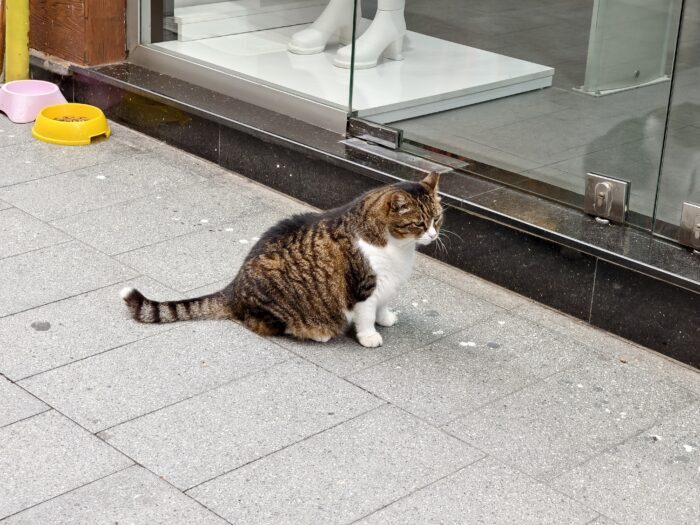
Everywhere in Turkey, people adore cats; they feed them and care a lot. Trabzon is not an exception. But unlike other Turkish provinces, here there are a lot of stray dogs which are chipped and seem friendly and well-fed. I think the reason is that locals are closer to Georgians, where dogs are adored and are literally everywhere. So in that regard, you feel more or less vibes of both Istanbul and the neighboring Georgian Batumi.
Surroundings of Trabzon
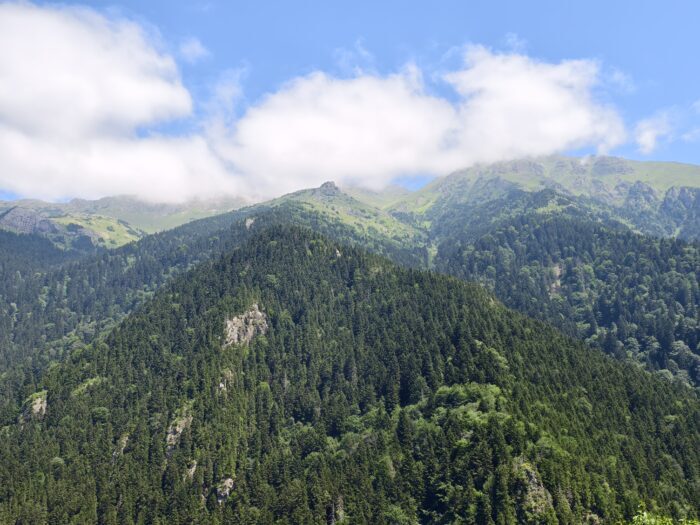
There wasn’t a chance to visit a lot of locations around the city, but from what I explored, three are quite interesting.
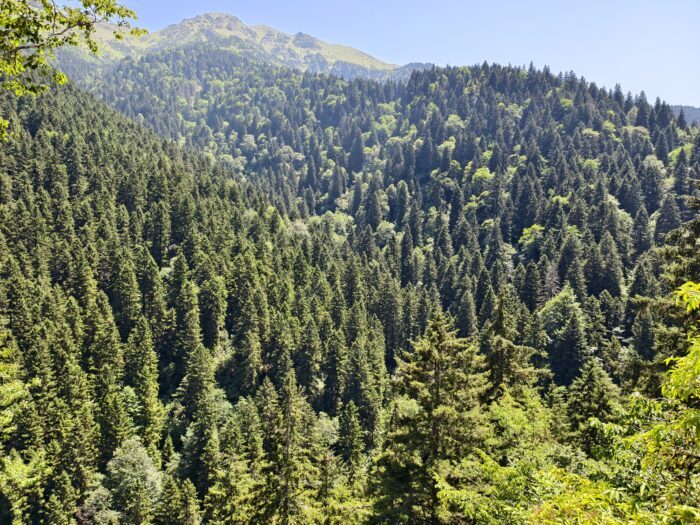
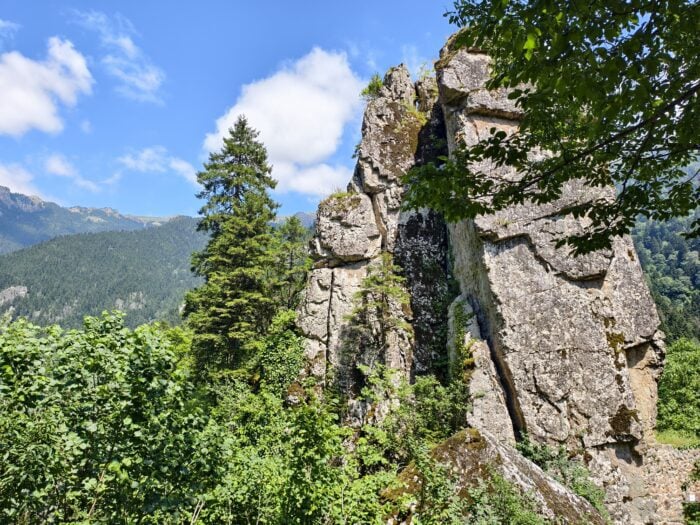
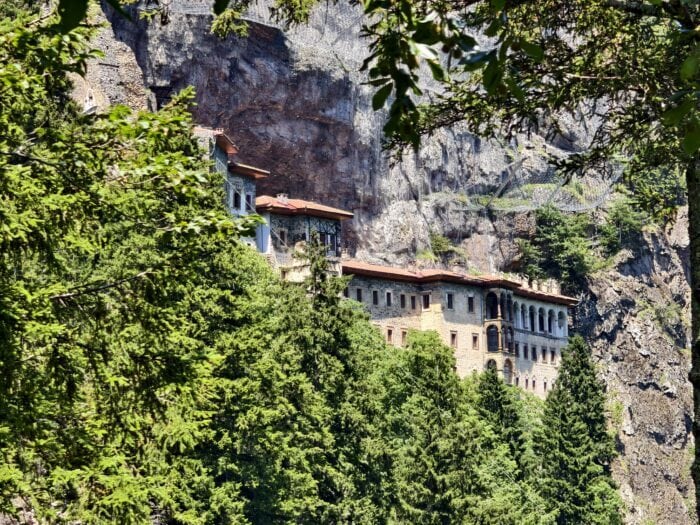
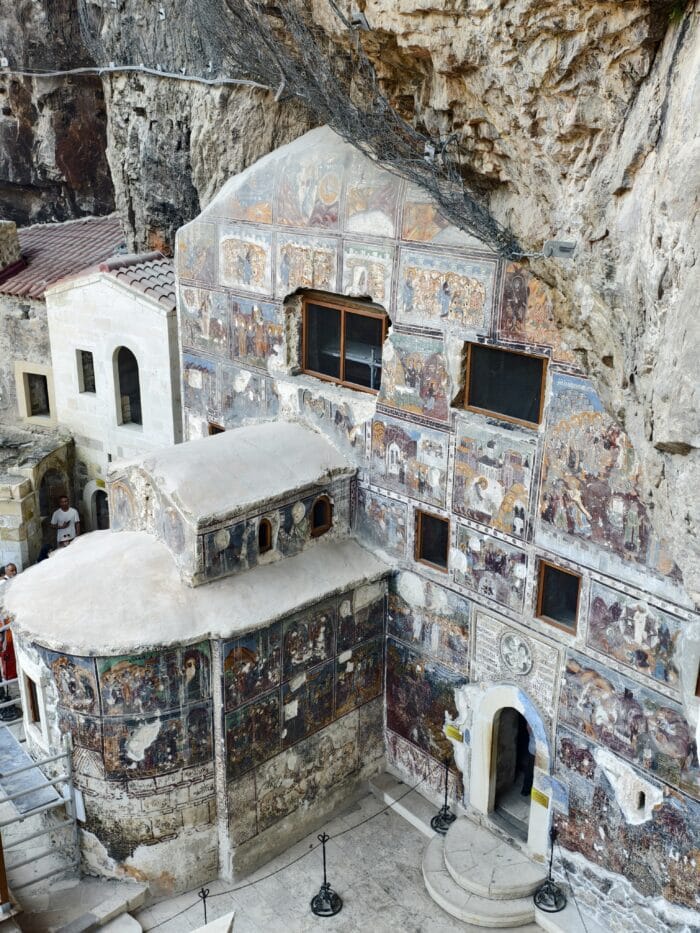
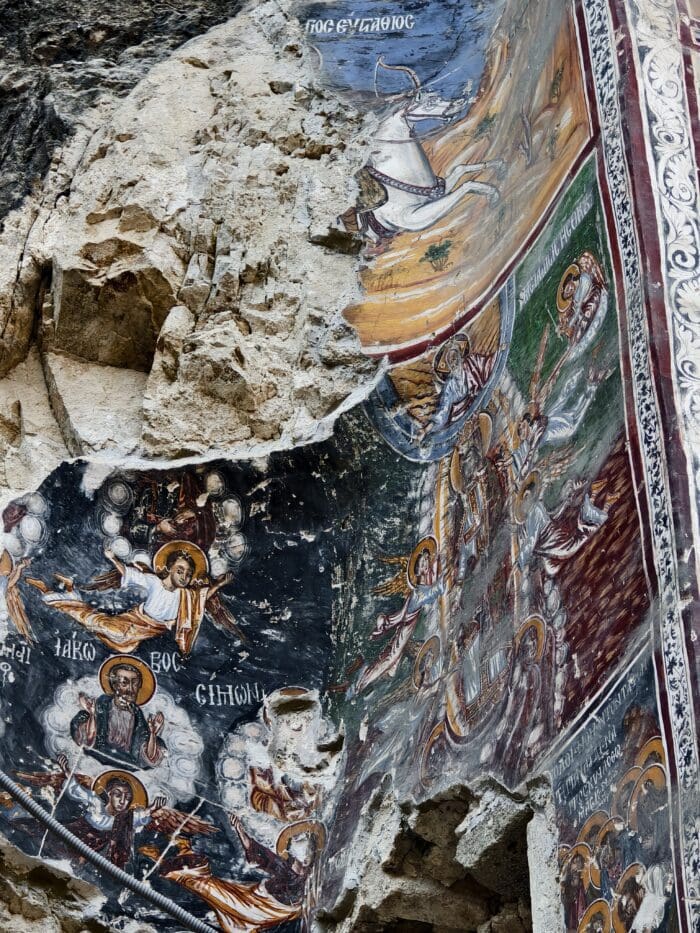
One is the Panagia Sümela Monastery, that was the main monastery of the Trebizond empire and as such accumulated an immense amount of wealth and land. The Ottomans didn’t touch the monks for quite a long period, but finally, the monastery was robbed and closed. It was neglected for a while, and its unique frescos were vandalized. However, the location had great touristic potential being located in the mountains covered with pine forests, so the government restored it, and now the entrance is paid. The monastery is carved right on a rock, so the view is really impressive.
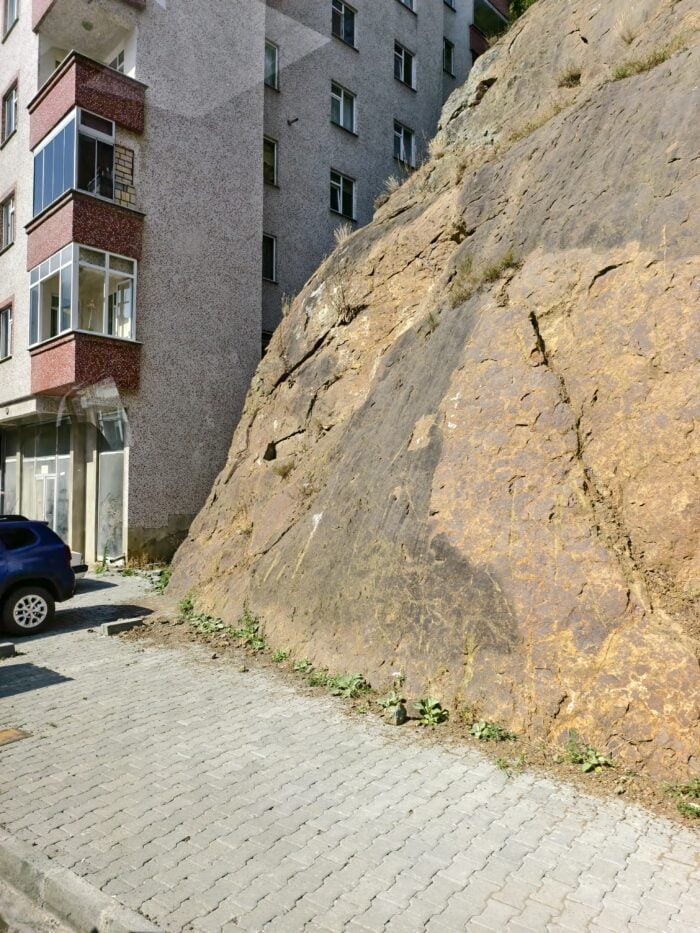
Another attraction is the city of Maçka. There isn’t much to see there except its unique location in a narrow valley. The population is growing fast, and the city is running out of space, so they carve local rocks to make room for new houses, worth visiting for an hour or two on the way to another sight.
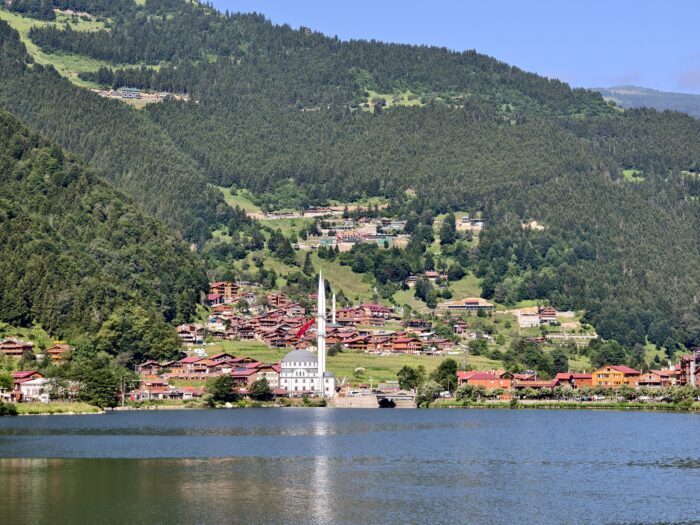
The third attraction I visited was the Uzungöl lake. It has a nice, prolonged shape and is located among surrounding mountains in a pine forest. The place wasn’t famous until recently and became popular among Arab tourists paying a lot to have access to natural resorts like this, having forests, mountains, and a lot of water contrary to their own countries, so the resort is oriented to them, and consequently, the price to stay is high, probably 2 or 3 times more than it might be.
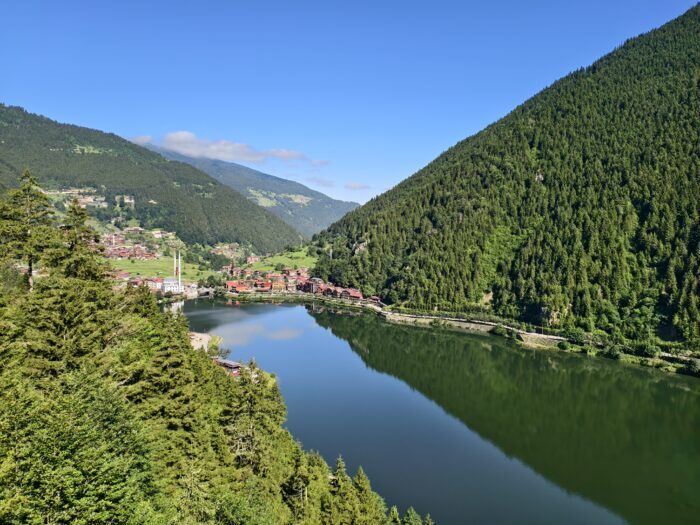
The whole northeastern Turkey has several national parks with hiking routes through pine or humid forests, high mountains with waterfalls and pure springs. Now and then, you can find remnants of old civilizations, be it Greek, Roman, or Ottoman. You can visit tea plantations omnipresent east of Trabzon and visit the tea capital, Rize. You can pick hazelnuts from trees and take them home and make your own Nutella. It’s safe to say that northeastern Turkey is undervalued and promoted less than it should be. However, the truth is you generally don’t go on the Turkish Black Sea shore to have a beach vacation as it’s considered much lower class than the Mediterranean or Aegean Sea, and even locals rarely go there for vacations, except when they want to save money. Beach infrastructure is underdeveloped there accordingly.
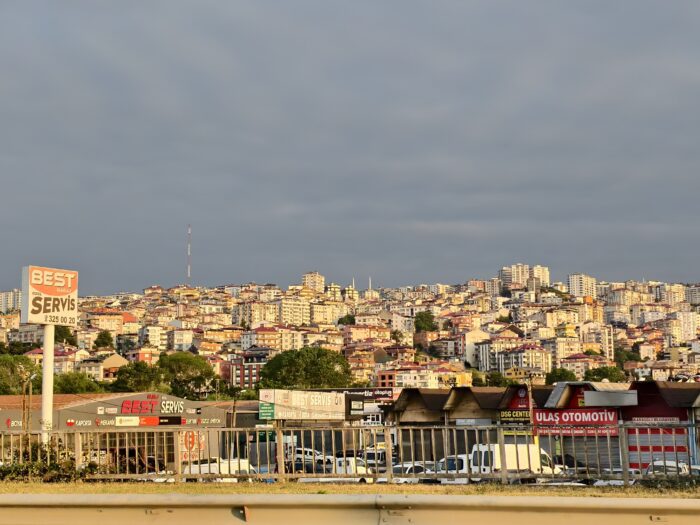
And yet more photos of the city of Trabzon
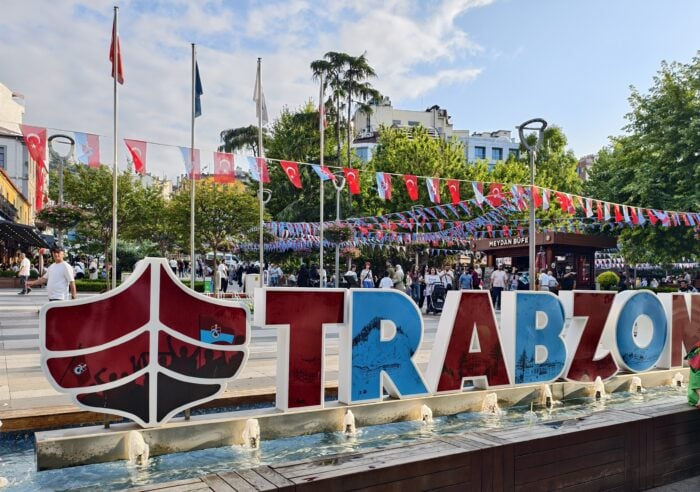
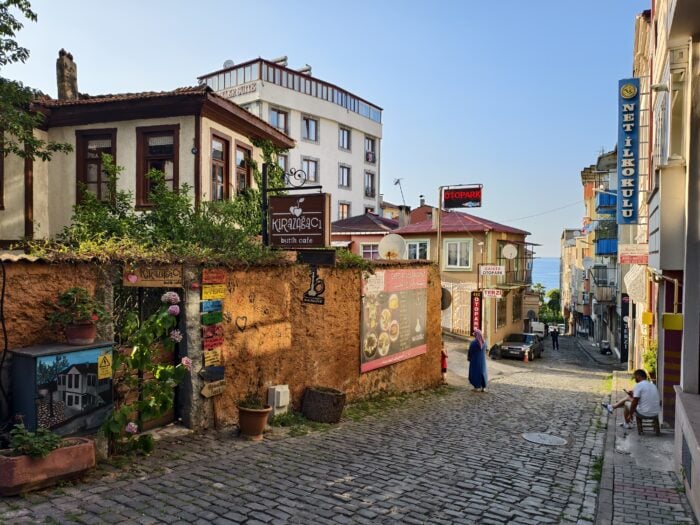
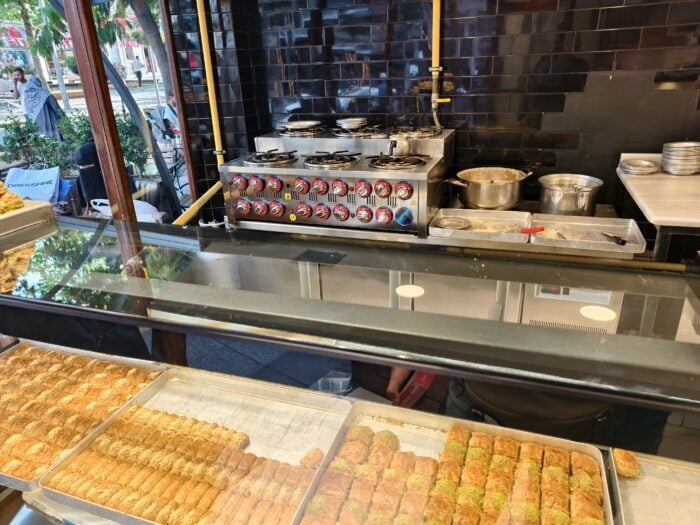
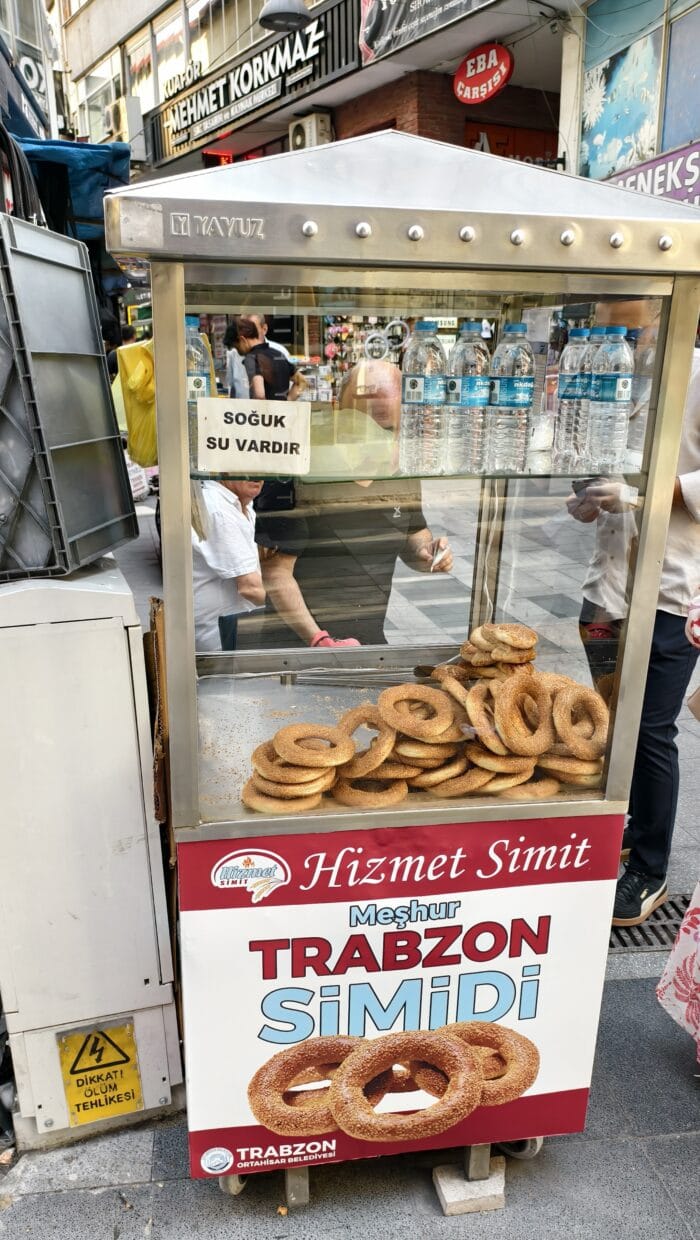
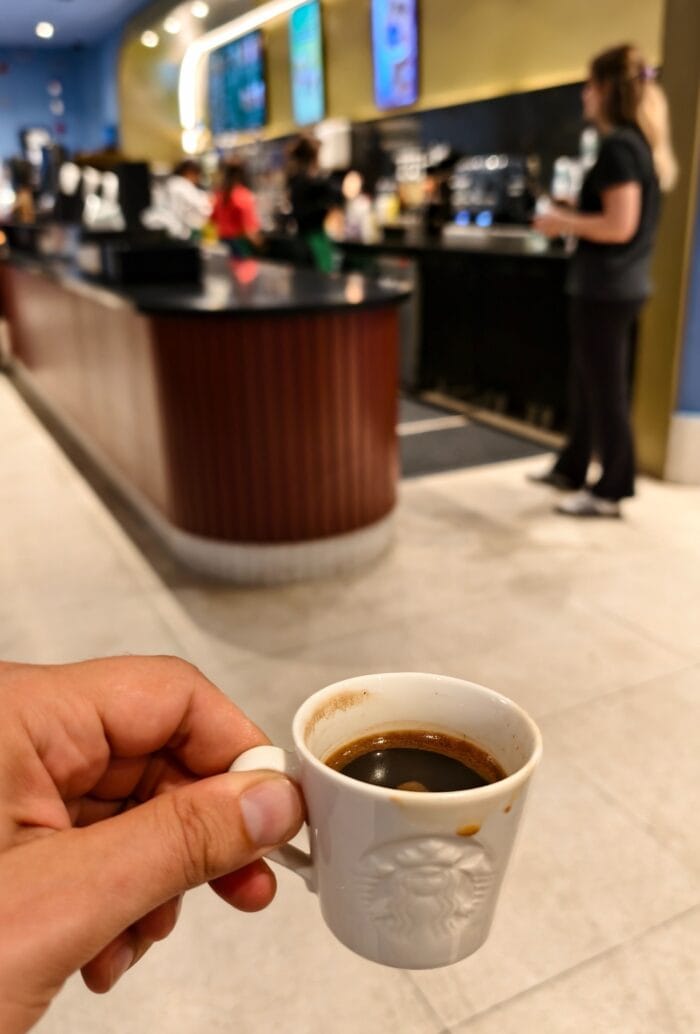
Turkey is a unique place where you can try Turkish-style coffee in a local Starbucks. And of course Turkish bretzels simits are omnipresent.
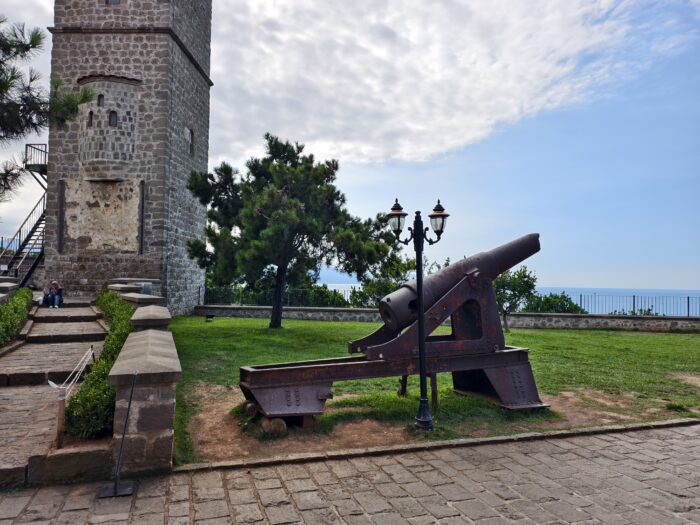
There is a Russian cannon as a reminder that the city was occupied by the Russian empire for a while during WW1.
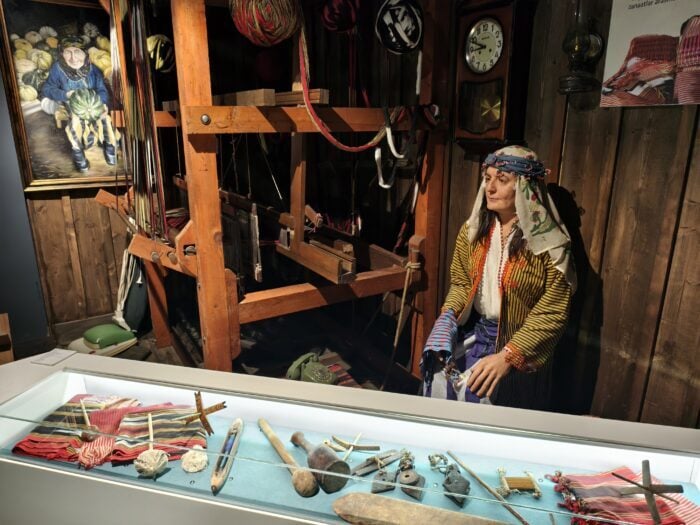
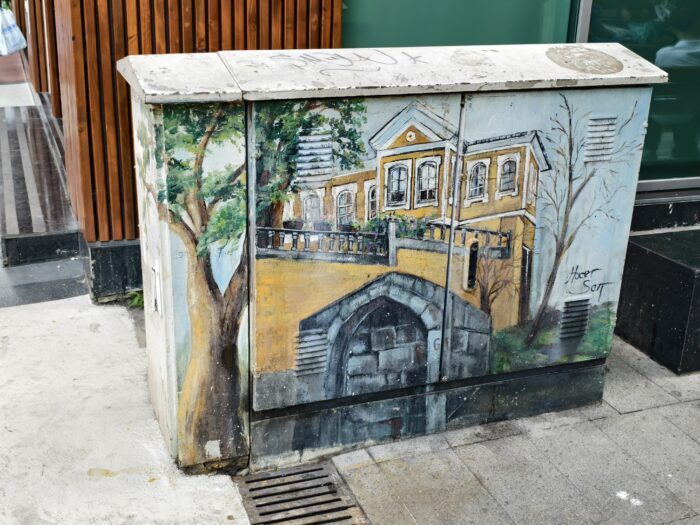
And here are more photos of a graffiti, the interior of a local museum and just the atmosphere of the city.